
Making Connections With Nature

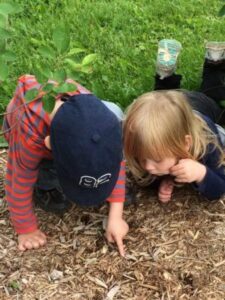
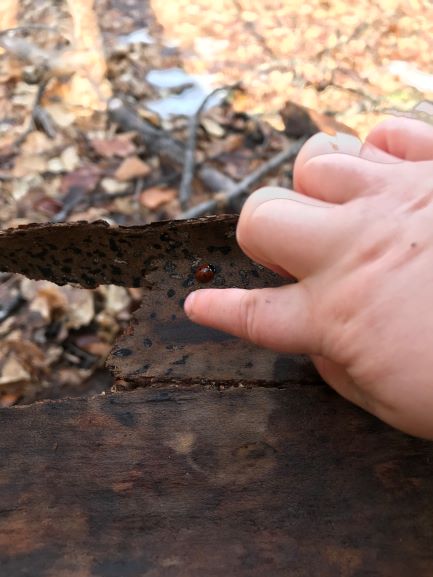
Close-up of a child's hand gently pointing to a ladybug on a piece of bark.

The children from Infant to Preschool make daily trips to the forest where they have the opportunity to explore and make connections with nature. While examining the forest, children have the ability to view it in a unique ways as they manipulate and explore the things around them (mud, water/puddles, sticks, leaves, bark, insects, etc). The educators are a part of this learning, observing and participating in the learning alongside the children; the educators and children are partners in this way, exploring the space together. The children are then able to make decisions about their play based on their previous, and new experiences and findings in the space each time they visit.

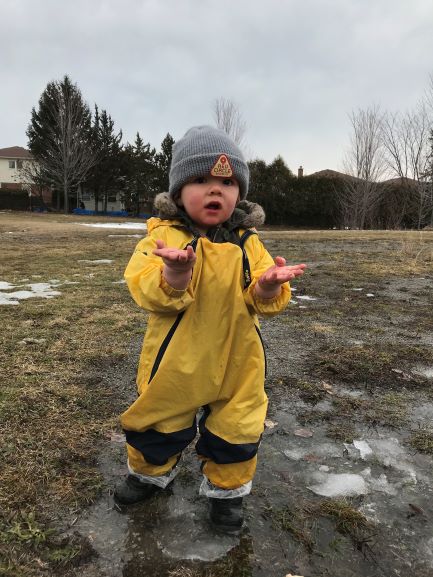
Toddler in a yellow rain suit standing in muddy field.
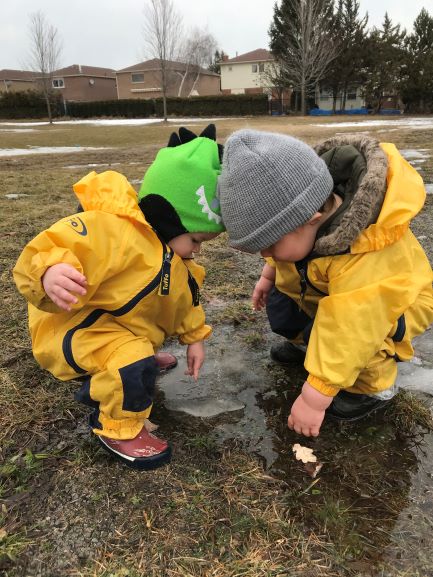
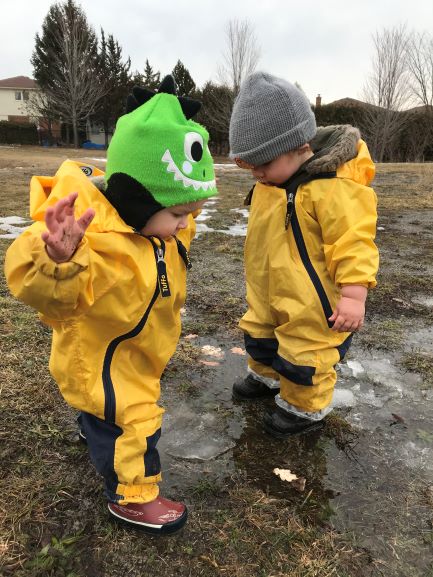
Two young children crouched together near a small puddle.
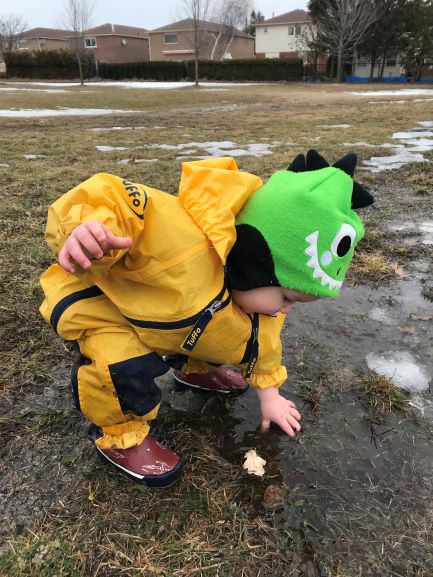
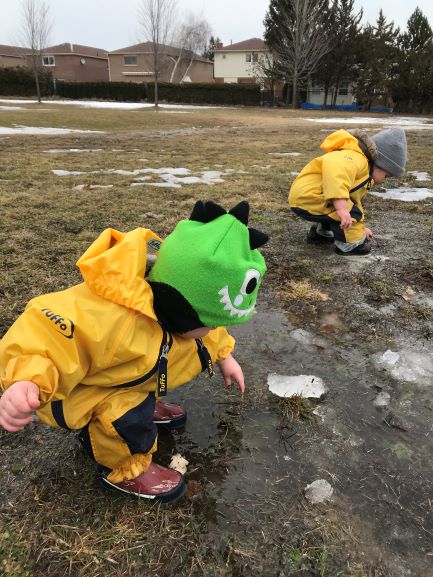
Child in a green monster hat and yellow rain suit reaching toward a leaf in puddle outdoors.

To capture these experience, the educators introduce ways to continue to scaffold the learning, which may include more in depth research about the topic the children are interested in. A lot of times, the educators and children become researchers who help each other to discover answers to their queries, and learn side-by-side.

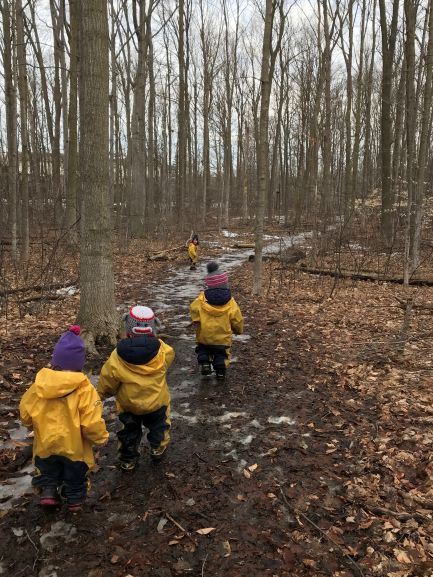
Group of children in yellow rain suits walking through a muddy forest path with fallen leaves.
Child crouched in the forest beside a log, reaching out to touch natural object.

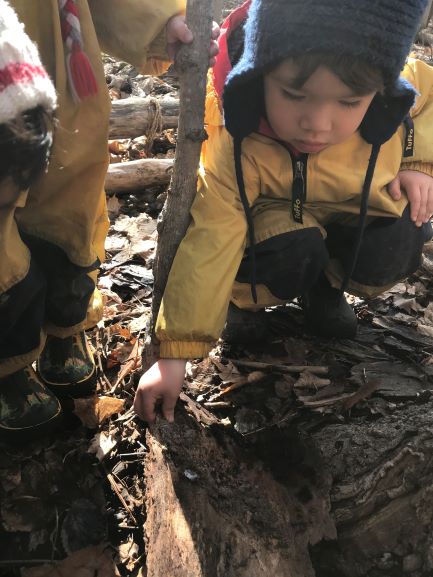
On one occasion, a child spotted a lady bug on a piece of bark. The child invited the other children and the educators to gather together and look closely at it, asking questions to try and figure out its purpose and what it was they were looking at. During the process of the discovery, the educator’s role becomes that of teacher, instilling the value of nature and respecting the things we see. The best way for them to understand this is to be able to explore on a personal level. Upon return to the centre, the educators and children researched the insect that was found, sharing the knowledge of the new insect with peers and other adults.

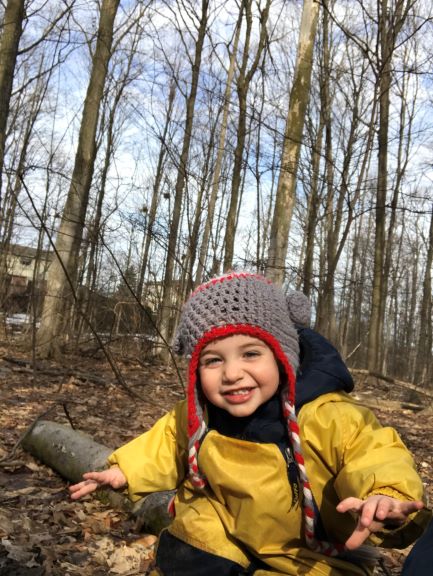
Smiling child in a yellow rain suit and hat in forest, surrounded by leaf-covered ground.
Two children in yellow rain suits squatting near icy puddles.
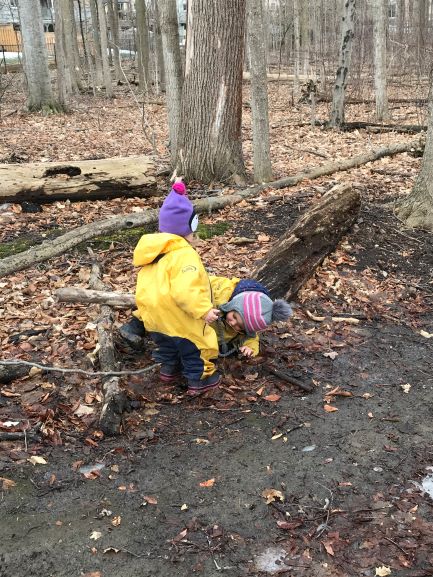
Two children wearing winter hats and rain suits kneeling beside a fallen tree trunk.

“The focus is not on teaching a body of knowledge or a predetermined set of topics. Nor is it centered on children’s achievement. The content of learning is focused on supporting the development of strategies, dispositions, and skills for lifelong learning through play and inquiry.” (How Does Learning Happen 2014. Pg 15).

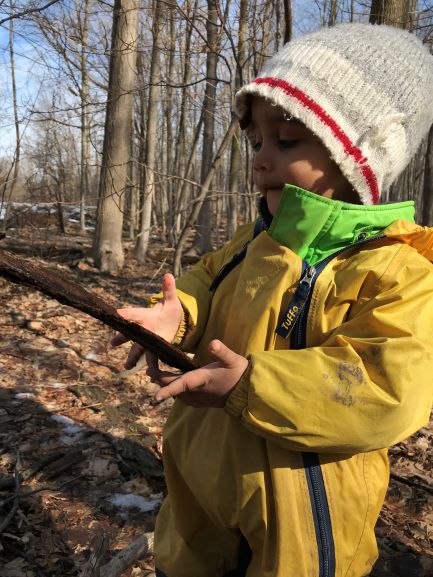
Child in a yellow rain suit and knit hat examining a large stick.
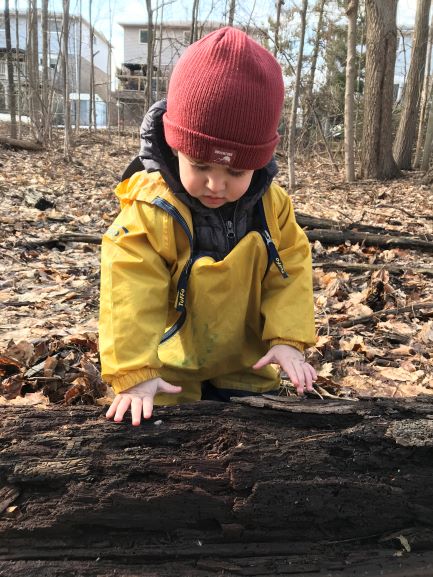
Child in a yellow rain suit and red hat touching surface of decaying log in forest.

“Opportunities to engage with people, places, and the natural world in the local environment help children, families, and educators build connections, learn and discover, and make contributions to the world around them. It fosters a sense of belonging to the natural environment.” (How Does Learning Happen 2014, pg.19).

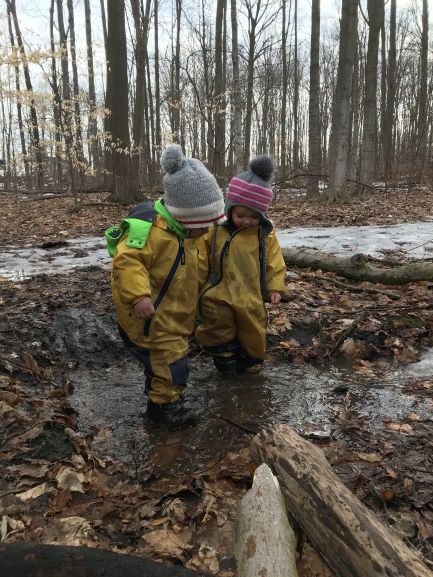
Two children standing on icey puddle surrounded by fallen leaves in forest.
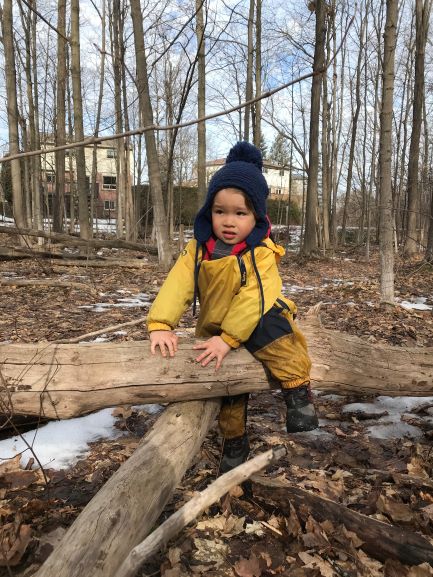
Child in yellow rain suit touching fallen tree trunk.
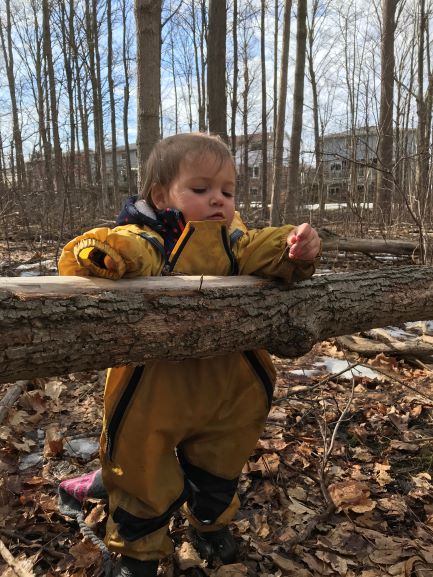
Child in yellow rain suit climbing over a large fallen tree trunk in icey forest.

“Opportunities to experience nature everyday and to care for and interact with the natural world enhance children’s connections to the world around them. A growing body of research suggests that connection to the natural world contributes to children’s mental, physical, emotional, and spiritual health and well-being.” (How Does Learning Happen 2014, pg. 25).

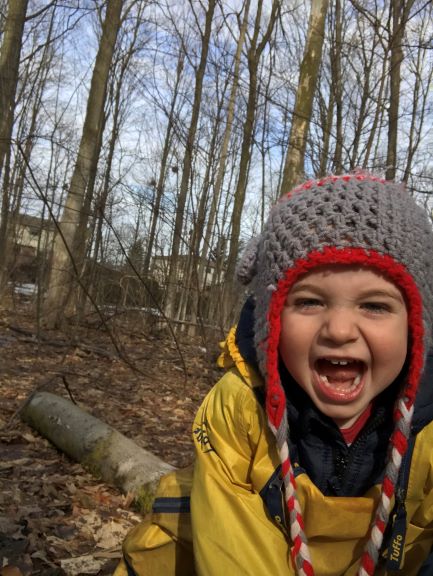
Smiling child in knit hat and yellow jacket laughing with joy in forest covered in dry leaves.
Two toddlers in yellow rain suits are looking at icy patch on the ground.

More Posts

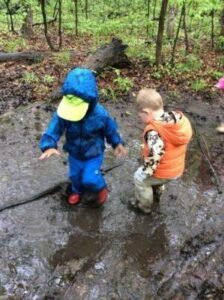
Two children splashing in large muddy puddle in forest.

The Mud Puddle

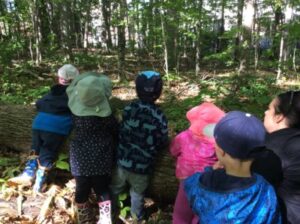
On May 26, 2017 during a visit to the local forest, we came across a large puddle of mud and spent the majority of our time exploring it.
Read More »